





Lorsqu'on s'intéresse aux amidons, notamment pour la production alimentaire à grande échelle, les applications industrielles ou encore les considérations nutritionnelles, deux termes reviennent souvent : amidon de manioc et amidon modifié. Ces ingrédients spécifiques influencent considérablement la texture finale, la durée de conservation et l'efficacité globale de la transformation d'un produit.
Comprendre les différences entre l'amidon de manioc et l'amidon modifié est essentiel pour les fabricants, les chefs professionnels et les consommateurs avertis afin de choisir la solution la mieux adaptée à leurs besoins. Cet article explore en détail ces matières premières, compare leurs propriétés, explique ce qu'est l'amidon de manioc et l'amidon modifié, et présente les nombreuses applications de l'amidon de tapioca.
Amidon de manioc vs amidon modifié : origine et fonctionnalité
Le débat entre l'amidon de manioc et l'amidon modifié porte sur leur origine, leurs méthodes de transformation et leurs performances fonctionnelles en situation de stress.
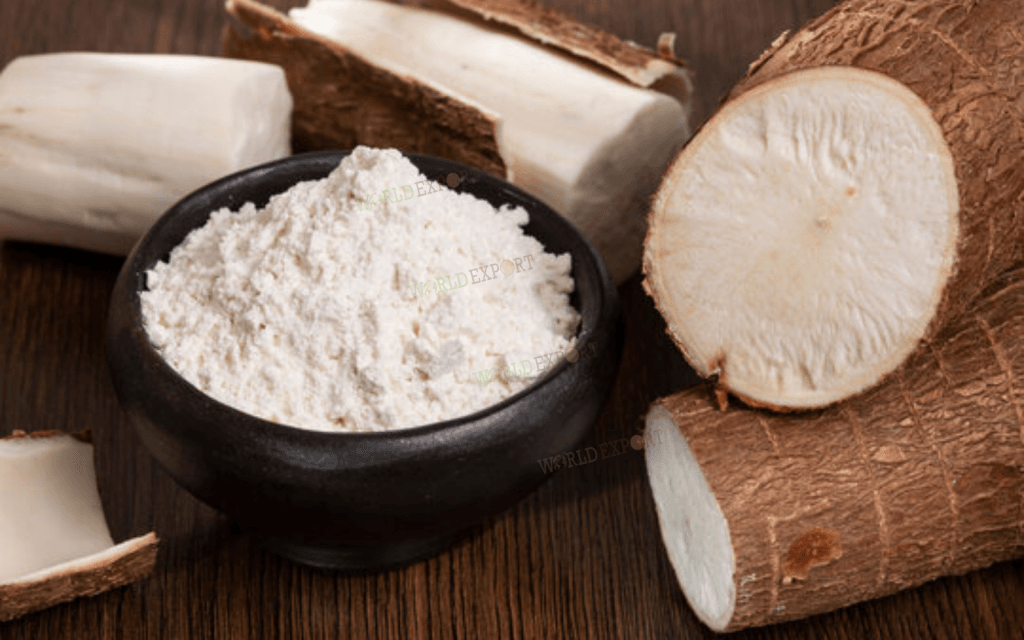
– Propriétés natives : L'amidon de manioc est directement extrait de la racine de la plante de manioc (Manihot esculentaElle est appréciée pour sa pureté naturelle, son goût neutre et l'excellente limpidité de sa pâte. Pour découvrir notre procédé d'extraction avancé et comment nous préservons la pureté naturelle du 100%, vous pouvez Regardez notre vidéo de production sur YouTube..
– Performances optimisées : En revanche, l'amidon modifié résulte de modifications chimiques, physiques ou enzymatiques apportées à l'amidon natif. Ces modifications, qui peuvent être appliquées à des bases de maïs, de pomme de terre ou de manioc, visent à améliorer des caractéristiques spécifiques telles que le pouvoir épaississant, la résistance à la chaleur ou la stabilité en milieu acide.
D’un point de vue pratique, le premier est souvent privilégié dans les produits “ clean label ” et sans gluten, tandis que le second est essentiel dans la transformation industrielle des aliments où la stabilité lors d’un stockage à long terme ou d’un mélange à fort cisaillement est cruciale.

Qu'est-ce que la fécule de manioc ? Un concentré de bienfaits naturels
Si vous vous demandez ce qu'est la fécule de manioc, il s'agit essentiellement d'un glucide naturel extrait par une série d'étapes de lavage, de râpage et de raffinage. Le produit obtenu est une poudre blanche brillante et inodore, au goût neutre qui ne masque pas les saveurs délicates des autres ingrédients.
Avantages de la forme autochtone
– Nature sans gluten : Il est inestimable dans les formulations alimentaires soucieuses de la santé et dans la pâtisserie sans gluten.
– Haute clarté : Il forme des gels transparents, ce qui le rend idéal pour les sauces brillantes et les garnitures aux fruits.
– Écologique : Le manioc est une culture résistante et tolérante à la sécheresse, ce qui fait de son amidon un choix durable pour les producteurs soucieux de l'environnement.
Pour les entreprises à la recherche de matières premières natives de haute pureté et de viscosité constante, vous pouvez Découvrez ici les spécifications de notre produit de fécule de tapioca de qualité supérieure.
Qu'est-ce que l'amidon modifié ? Solutions sur mesure
Pour répondre à la question “ Qu’est-ce que l’amidon modifié ? ”, il faut le considérer comme un ingrédient « sur mesure ». Les amidons natifs présentent souvent des limitations ; par exemple, ils peuvent perdre leur pouvoir épaississant à la congélation ou se dégrader dans des milieux très acides (comme une sauce au citron).
Types courants de modifications
– Réticulation : Renforce les granules d'amidon pour qu'ils ne se rompent pas lors de la cuisson à haute température.
– Stabilisation (acétylation) : Empêche le “ suintement ” ou la séparation de l'eau dans les aliments congelés.
– Prégélatinisation : Permet à l'amidon d'épaissir dans l'eau froide sans ébullition.
En résumé, l'amidon modifié représente le point de rencontre entre la science alimentaire et la fabrication : il s'agit de modifier la structure moléculaire naturelle pour obtenir des performances constantes dans des environnements industriels exigeants.
Comprendre l'amidon de tapioca dans l'industrie moderne
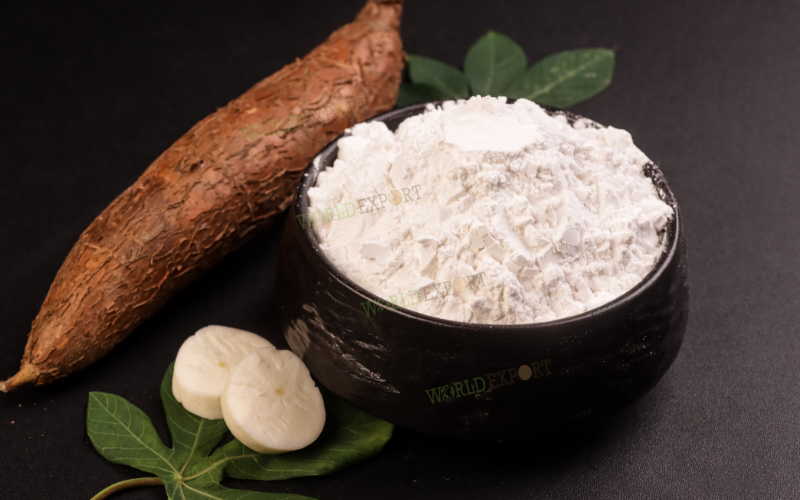
L'amidon de tapioca est souvent utilisé comme synonyme d'amidon de manioc. Dans l'industrie, il est apprécié pour sa gélification et sa transparence élevées. Il est privilégié pour de nombreuses applications, des puddings haut de gamme aux perles de bubble tea, en passant par les adhésifs industriels et l'apprêt textile.
Il est intéressant de noter que, bien que la fécule de tapioca soit naturellement performante, elle sert souvent de base à de nombreuses versions modifiées. En appliquant les modifications mentionnées précédemment à cette base, les fabricants peuvent créer un produit qui conserve le goût pur du manioc tout en bénéficiant de la robustesse d'une fécule de synthèse. Cette polyvalence en fait un ingrédient fiable aussi bien en cuisine qu'en usine.
Matrice de décision : Choisir le bon amidon
Pour choisir entre l'amidon de manioc et l'amidon modifié, les fabricants doivent évaluer leurs conditions de transformation :
– Choisissez Native (manioc/tapioca) si : Vous ciblez un marché “ naturel ” ou “ à étiquetage clair ”, ou si votre processus de cuisson est doux.
– Choisissez Modifié si : Votre produit subit des variations de température extrêmes (congélation/mise en conserve), a un pH très bas ou nécessite une durée de conservation supérieure à 12 mois.
Comprendre ce qu'est l'amidon de manioc et ce qu'est l'amidon modifié permet d'éliminer les conjectures, garantissant ainsi que le produit final conserve sa texture prévue, de l'usine à l'assiette du consommateur.
Conclusion
En résumé, la comparaison entre l'amidon de manioc et l'amidon modifié révèle de nombreuses différences liées à leur origine, leur transformation et leurs applications. Si l'amidon de tapioca naturel offre pureté, neutralité et une extraction respectueuse de l'environnement, l'amidon modifié, quant à lui, propose des fonctionnalités avancées répondant aux besoins industriels complexes. Face à l'évolution de l'industrie agroalimentaire, la possibilité de choisir entre ces deux types d'amidon – ou de les utiliser conjointement – témoigne des progrès de la science alimentaire moderne et de sa capacité à fournir des solutions performantes pour répondre aux besoins mondiaux.
World Export est un fournisseur mondial de confiance d'amidon de tapioca de première qualité au Vietnam. Nous proposons de l'amidon natif de haute pureté ainsi que des solutions d'amidon de pointe, garantissant des prix compétitifs, des expéditions en vrac flexibles et une livraison fiable dans le monde entier. En tant qu'exportateur de premier plan, nous valorisons les abondantes ressources en manioc du Vietnam pour approvisionner divers secteurs, notamment l'agroalimentaire, la papeterie et le textile. Notre engagement envers la qualité garantit que chaque livraison répond aux normes internationales, vous assurant ainsi un approvisionnement constant et durable.
Contactez-nous dès aujourd'hui pour recevoir des informations détaillées sur nos produits et un devis personnalisé adapté à vos besoins !
SOCIÉTÉ D'EXPORTATION MONDIALE LIMITÉE
Adresse: No. 35, rue 12, quartier résidentiel Van Phuc 1, quartier 5, quartier Hiep Binh, Hô Chi Minh-Ville, Vietnam
Tél / Whatsapp / Kakao Talk : +84 932 632 317
E-mail: supportwe@worldexport.com.vn