






In the current global industrial landscape, the shift toward sustainable and cost-effective additives has become a priority for high-end manufacturers. Wood powder, a finely processed natural fiber, has emerged as a premium alternative to synthetic fillers. It offers a unique combination of structural reinforcement, lightweight properties, and eco-friendly benefits. Whether utilized as high-grade wood powder for mushroom cultivation, a primary fiber source in wood powder for paper manufacturing, or a reinforcing agent in wood powder for WPC manufacturing, this material is reshaping modern production standards.
The Engineering Advantage of Natural Fillers in Industrial Panels
One of the most prominent applications for these organic particles is in the production of architectural ceiling and wall panels. For years, the industry relied heavily on calcium-based additives to reduce costs. However, these inorganic fillers often resulted in heavy, brittle end-products with poor internal adhesion.
Integrating high-purity wood residuals presents an ideal engineering solution. By incorporating these natural fibers, factories can produce lighter, more durable panels with a superior surface finish. This organic component creates a robust connection system within the material matrix, allowing the panels to withstand higher temperatures while maintaining structural integrity. This versatility has made it a staple in the modern construction materials sector, satisfying both aesthetic and functional requirements.
Technical Breakthroughs in Wood Powder for Paper Manufacturing
The paper industry remains one of the largest global consumers of processed lignocellulosic fibers. Utilizing specialized wood powder for paper manufacturing involves a sophisticated blend of mechanical and chemical treatments designed to preserve fiber length and strength.
The Modern Papermaking Workflow
The production process begins when the fiber is dissolved into a concentrated pulp solution. This solution passes through precision knife rollers where the fibers are cut according to specific settings. In this stage, the fine powder is mixed with various additives to create different paper grades, from industrial packaging to fine stationery.
Certain wood species, such as pine and spruce, are highly sought after due to their light natural color, which significantly reduces the need for heavy bleaching chemicals. To see our advanced fiber processing and quality control in action, you can watch our production video on YouTube. This commitment to quality ensures that the final paper products possess excellent opacity and tensile strength.

Reinforcing Sustainability: Wood Powder for WPC Manufacturing
Wood-Plastic Composite (WPC) is a revolutionary hybrid material that bridges the gap between timber and plastic. The role of wood powder for WPC manufacturing is to provide the necessary natural reinforcement that gives the composite its wood-like texture and superior mechanical properties.
A standard WPC formulation is a complex blend of plastic particles (PE or PVC), stone powder, and binding compounds. The high-quality fiber acts as a functional filler that enhances the material’s overall strength and flexibility. Unlike pure plastic, WPC products are more resistant to UV rays and moisture, making them ideal for outdoor decking and fencing. Sourcing natural, high-purity residuals ensures that the final products are high-performing and contribute to environmental preservation by upcycling wood waste into long-lasting, recyclable building materials.
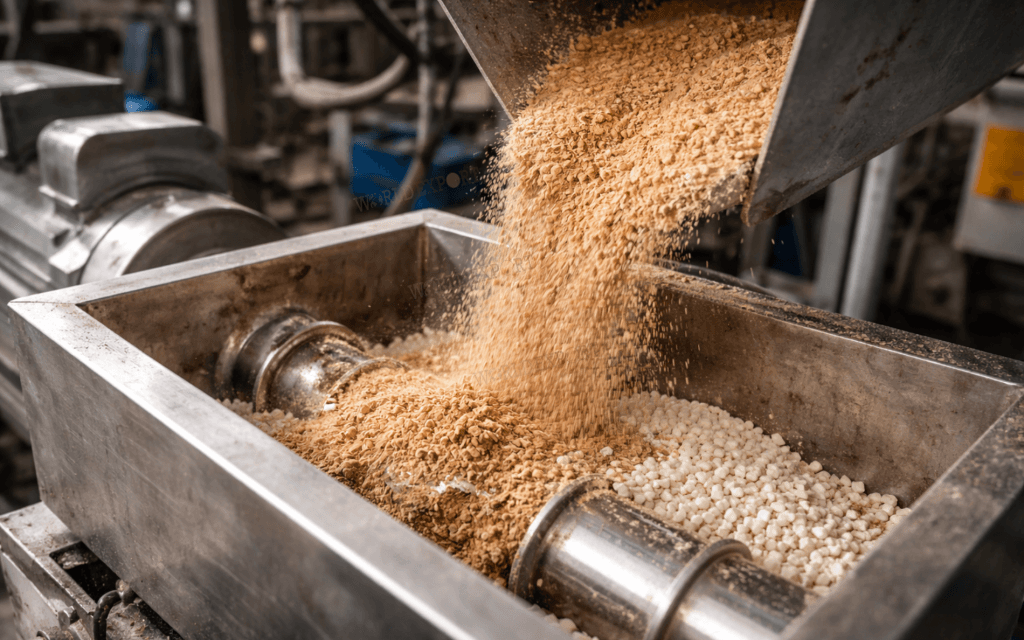
Precision Substrates: Wood Powder for Mushroom Cultivation
Beyond heavy industry, the agricultural sector has found immense value in using wood powder for mushroom cultivation. Fungi, especially gourmet and medicinal varieties like Shiitake, Oyster, or Reishi, require a substrate rich in lignin and cellulose to produce healthy fruiting bodies.
Why Organic Substrates Drive Higher Yields
Using specialized wood powder for mushroom cultivation provides a perfectly balanced micro-environment. Unlike raw sawdust, the controlled particle size of the powder allows for:
– Rapid Mycelial Colonization: The fine texture provides an increased surface area, allowing the fungal network to absorb nutrients more efficiently and shorten the growth cycle.
– Optimal Aeration and Moisture Retention: The porous nature of the material prevents anaerobic conditions—which often lead to crop-destroying contamination—while holding the precise amount of water needed for fungal metabolism.
– Consistent Bio-Efficiency: Heat-treated wood particles offer a sterile and nutrient-dense base, leading to more predictable and abundant harvest flushes.
For professional growers looking to optimize their substrate recipes for maximum yield, you can explore our premium Wood Powder product specifications here.

Quality Control and Global Sourcing Standards
To satisfy the rigorous demands of these diverse industries, the manufacturing of wood residuals must follow strict quality protocols. Factors such as consistent mesh size, extremely low moisture content, and the total absence of impurities like glue or bark are non-negotiable.
Vietnam has emerged as a global hub for these materials, offering a competitive advantage in both quality and sourcing. International manufacturers are increasingly turning to Vietnamese suppliers to secure high-quality fibers that meet global environmental and technical standards. Consistent supply chains and rigorous laboratory testing ensure that every ton of material performs predictably, whether it is destined for a paper mill, a WPC factory, or a large-scale mushroom farm.
The Future of Natural Fiber Composites
As the world moves toward a circular economy, the demand for renewable materials is expected to accelerate. Innovation in fiber processing is allowing for even finer powders, which open up new possibilities in 3D printing and advanced bioplastics. By replacing synthetic fillers with renewable wood residuals, industries can significantly lower their carbon footprint while improving the performance of their products. The synergy between biology and manufacturing is creating a new era of eco-conscious industrialism.
Conclusion
In summary, the versatility of this natural material makes it a cornerstone of 21st-century manufacturing. Its roles in providing a nutrient-rich wood powder for mushroom cultivation, a high-strength component in wood powder for WPC manufacturing, and a clean fiber source for wood powder for paper manufacturing demonstrate its immense value across sectors. By choosing sustainable wood residuals, industries can improve product quality, achieve cost-efficiency, and contribute to a greener planet.
World Export is a trusted supplier of high-quality wood sawdust and powders in Vietnam, providing competitive pricing, flexible bulk shipping options, and fast, reliable delivery worldwide. We specialize in providing premium wood powder for mushroom cultivation, supporting the global agricultural sector with superior substrates.
Simultaneously, we serve as a major partner for international industrial projects requiring high-purity wood powder for paper manufacturing and wood powder for WPC manufacturing. Our expertise in global logistics and rigorous quality assurance makes us the preferred choice for manufacturers seeking excellence in sustainable natural fiber solutions.
Contact us today to receive detailed product information and the latest quotation tailored to your needs!
WORLD EXPORT COMPANY LIMITED
Address: No. 35, Street 12, Van Phuc 1 Residential Area, Quarter 5, Hiep Binh Ward, Ho Chi Minh City, Vietnam
Tel / Whatsapp / Kakao Talk: +84 932 632 317
Email: supportwe@worldexport.com.vn