






The first 24 hours of a calf’s life are arguably the most critical period in the entire cattle production cycle. During this “golden window,” a calf transitions from the sterile, temperature-controlled environment of the womb to a world full of pathogens and climate fluctuations. At World Export, we believe that success starts from the ground up. Whether you are a seasoned rancher or a newcomer, understanding the nuances of newborn calf care is the key to reducing mortality rates and ensuring a productive future herd.
Preparing for Success: Management of Newborn Calf
Effective management of newborn calf begins long before the calf actually hits the ground. A clean, stress-free environment for the mother is paramount.
The calving area should be a dedicated space—ideally a grassy paddock or a deeply bedded stall that has been sanitized. Bacteria thrive in damp, dirty conditions, and a newborn calf has zero natural immunity. By ensuring the birthing area is dry and clean, you significantly reduce the risk of umbilical infections and early-onset scours.
Furthermore, preparation involves having a “calving kit” ready. This should include:
7% Iodine or Chlorhexidine for navel dipping.
Clean towels to assist with drying.
A suction bulb to clear airways.
High-quality colostrum replacer (as a backup).

2. The Golden Hour: How to Care for a Newborn Calf
When the calf is born, the clock starts ticking. To master How to Care for a Newborn Calf, you must follow these immediate steps:
Clear the Airways
The very first priority is breathing. If the calf doesn’t start breathing immediately, clear the mucus from its nose and mouth. You can tickle the inside of the nostril with a clean piece of straw to stimulate a sneeze reflex, which helps clear the lungs.
Navel Disinfection
The umbilical cord is a highway for bacteria to enter the calf’s bloodstream. Within the first hour, dip the navel in a 7% iodine solution. This doesn’t just kill bacteria; it helps the cord dry out and close up faster.
The Colostrum Rule
Colostrum is “liquid gold.” Unlike humans, calves are born without antibodies. They must ingest colostrum—the mother’s first milk—to gain passive immunity.
Timing: Ideally within the first 2 hours, and definitely within 6 hours.
Quantity: Aim for 3 to 4 quarts (about 10% of their body weight).
Quality: Ensure the colostrum is thick and creamy, indicating a high concentration of immunoglobulins.
Long-Term Growth: How to Raise a Newborn Calf
After the initial 24 hours, the focus shifts to how to raise a newborn calf into a strong, weaning-ready animal.
Nutritional Transition
While milk is the primary diet, introducing a “calf starter” (high-protein grain) as early as day five encourages rumen development. Access to clean, fresh water is also non-negotiable, even when they are consuming high volumes of milk.
Health Monitoring
Consistency is key. Monitor the calf daily for signs of illness. A healthy calf is alert, has clear eyes, and dry ears. If you notice drooping ears, a runny nose, or “scours” (diarrhea), consult a veterinarian immediately. Early intervention is the difference between a minor setback and a loss.

Optimizing the Environment with Premium Bedding
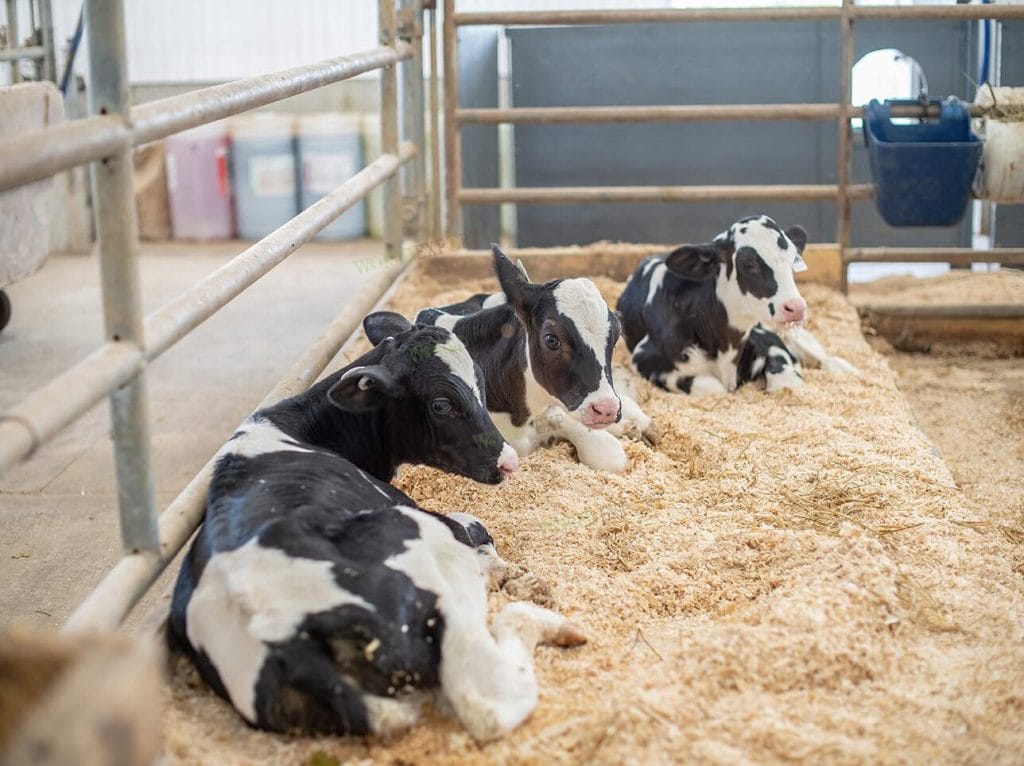
The physical environment is just as important as nutrition. Bê con (calves) spend over 80% of their time lying down. Therefore, the surface they rest on dictates their health.
We highly recommend using high-absorbency materials to keep the calf dry and warm. Wood sawdust and mixed wood shavings are the gold standards in modern calf management. Unlike straw, which can hold moisture and harbor pathogens, kiln-dried wood products provide superior insulation and moisture-wicking properties. This keeps the calf’s “nesting” area hygienic and reduces the risk of respiratory issues caused by ammonia buildup.
World Export: Your Trusted Partner for Bedding Solutions
Since 2017, World Export has been a leading Vietnamese company exporting high-quality wood products globally. We understand that uniform quality is vital for large-scale farm management.
All our products are sourced from sustainably managed forests and processed in our modern factories. Our advanced drying and screening systems maintain low moisture and high absorbency, ensuring that every batch meets the rigorous demands of international livestock standards.
Why Choose World Export Products?
Our Wood Sawdust and mixed Wood Shavings are specifically processed to be dust-free and highly absorbent, making them perfect for sensitive newborn calves. We offer flexible and professional packaging solutions to suit your logistics needs.
=> Explore the full range of mixed wood shavings offered by World Export here
=> Discover wood sawdust from World Export designed for Cattle bedding
Conclusion
Successful newborn calf care is a blend of timely intervention, proper nutrition, and a superior environment. By focusing on the “Golden Hour” and maintaining a clean, dry living space with premium bedding, you set your livestock up for a lifetime of health.
Are you looking to upgrade your farm’s hygiene and comfort? Contact World Export today to receive a quote for our sustainably sourced, high-absorbency wood sawdust and shavings. Let us help you grow your herd with the quality they deserve.