








Limestone is a versatile mineral widely used across industries for its strength, purity, and adaptability. From enhancing construction materials to improving paper quality, the uses of limestone are diverse. In this article, we explore how limestone serves as a vital component in construction, the paper industry, agriculture, and more. Understanding these applications of limestone will help you appreciate its significance and make better sourcing decisions.
What Is Limestone?
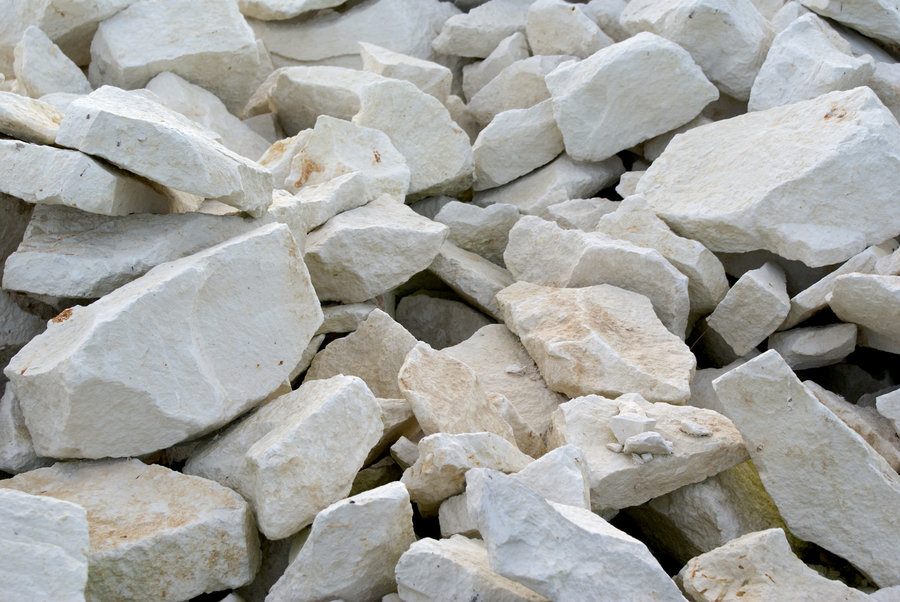
Limestone is a type of sedimentary rock primarily composed of the mineral calcite, or calcium carbonate (CaCO₃). This stone is often the most of the essence, but rarely in pure form. It often contains natural impurities such as clay, sand, silt, or bitumen. The color of limestone varies widely depending on its composition, ranging from white and gray to light green, yellow, pink, or even black.
Most limestones have a granular texture. Their constituent grains range in size from 0.001 mm (0.00004 inch) to visible particles. In many cases, the grains are microscopic fragments of fossil animal shells. (Britannica, 2025)
Limestone has two origins: (1) biogenic precipitation from seawater, the primary agents being lime-secreting organisms and foraminifera; and (2) mechanical transport and deposition of preexisting limestones, forming clastic deposits. Travertine, tufa, caliche, chalk, sparite, and micrite are all varieties of limestone. (Britannica, 2025)
Key Properties and Benefits of Limestone
Limestone provided by World Export is known for its high purity and consistent performance across multiple industrial applications. The product contains 98.55% calcium carbonate (CaCO₃), ensuring excellent reactivity and quality. It includes minimal impurities such as iron oxide (Fe₂O₃ at 0.008%), magnesium oxide (MgO at 0.1%), and silica (SiO₂ at 0.09%), which enhance its stability and suitability for diverse uses.
With a pH value of 8.62, the limestone is naturally alkaline, making it ideal for applications in agriculture, construction, and manufacturing. Its whiteness (98.12%) and brightness (95.22%) reflect superior purity, perfect for industries like paper, paint, and plastics that require high optical quality.
The fine particle sizes (D97: 29.8 µm, D50: 6.82 µm) ensure excellent dispersion and smooth performance in production processes. This balance of purity, fineness, and brightness makes World Export’s limestone a reliable material for high-end industrial and environmental applications.
Uses of Limestone in Construction
Limestone has served as an essential material in construction for hundreds of years, and it continues to play a crucial role in modern infrastructure. It is extensively used in the building of homes, roads, and bridges. Thanks to its strength and natural resistance to weathering, limestone is ideal for exterior cladding, paving, and as a key ingredient in concrete production. Its natural beauty also lends an elegant, timeless appearance to both traditional and contemporary architecture.

Today, limestone is finding in innovative construction methods. Lime-based aerated concrete provides lightweight insulation, while carbonation curing allows lime to reabsorb carbon dioxide during hardening, helping to lower carbon emissions. Emerging technologies such as biochar-lime composites and 3D-printed lime structures are also expanding the potential of limestone in sustainable and eco-friendly construction.
Agricultural Applications of Limestone
One of the most significant applications of limestone is in agriculture, where it is widely used as agricultural lime to enhance soil quality. Finely ground limestone helps neutralize soil acidity, improving fertility and creating a healthier environment for crops to thrive. By increasing the soil’s pH level, it allows essential nutrients such as nitrogen, phosphorus, and potassium to become more accessible to plants, ultimately boosting growth and yield.
Beyond pH correction, limestone also contributes to better soil structure by encouraging the formation of stable aggregates. This process enhances both aeration and moisture retention, supporting robust root development. Furthermore, limestone enriches the soil with calcium and magnesium, two vital minerals for plant health and productivity, making it an indispensable material for sustainable farming.
Raw Material in the Production of Cement and Steel and Glass
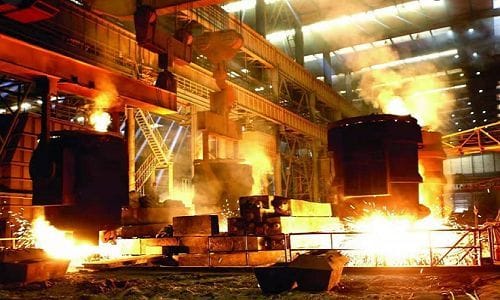
In the industrial and manufacturing fields, limestone serves as an essential raw material across multiple production processes, especially in cement, steel, and glass manufacturing. In cement production, limestone acts as the main ingredient. When combined with clay and heated in a kiln, it transforms into clinker, which is then finely ground to create cement – a cornerstone of modern construction.
In steelmaking, limestone functions as a fluxing agent, helping to remove impurities and balance the chemical composition of the final product. Meanwhile, in the glass industry, limestone reduces the melting point of silica, improving efficiency in the glass-forming process.
Overall, limestone is indispensable to modern manufacturing, supporting the production of critical materials that underpin infrastructure and development worldwide.
Other Industrial Applications
Limestone contributes significantly to environmental protection, especially in flue gas desulfurization (FGD) systems at power plants. When fossil fuels are burned, they emit sulfur dioxide, a major air pollutant. Limestone is used to capture and neutralize this gas, forming gypsum as a by-product. This process not only helps reduce emissions but also supports cleaner energy production.
In water treatment, limestone serves as an effective agent for balancing pH levels, removing contaminants, and improving overall water quality for both industrial and residential use.
Crushed and burnt limestone is mixed with water to create a mineral-rich paint. When applied to masonry or plaster, it bonds through carbonation, forming a durable and breathable finish that enhances both aesthetics and longevity.
In the paper industry, limestone is valued for its whiteness and smoothness, making it an ideal additive in producing high-quality paper products such as candy box paper, egg cartons, and cardboard.
Why Choose World Export for Limestone?
World Export is a reliable supplier of high-quality limestone tailored for various industrial applications. With limestone containing over 98% CaCO₃, excellent whiteness, and fine particle sizes (D97 at 29.8 µm, D50 at 6.82 µm), our products ensure consistent performance across construction, paper, and environmental sectors.
We prioritize strict quality control, sustainable sourcing, and on-time global delivery, making us a trusted partner for businesses seeking dependable limestone supply in bulk.
Contact us today to receive a quotation!
WORLD EXPORT COMPANY LIMITED
No. 35, Street 12, Van Phuc 1 Residential Area, Quarter 5, Hiep Binh Ward, Ho Chi Minh City, Vietnam
Tel / Whatsapp / Kakao Talk: +84 932 632 317
Email: supportwe@worldexport.com.vn
